

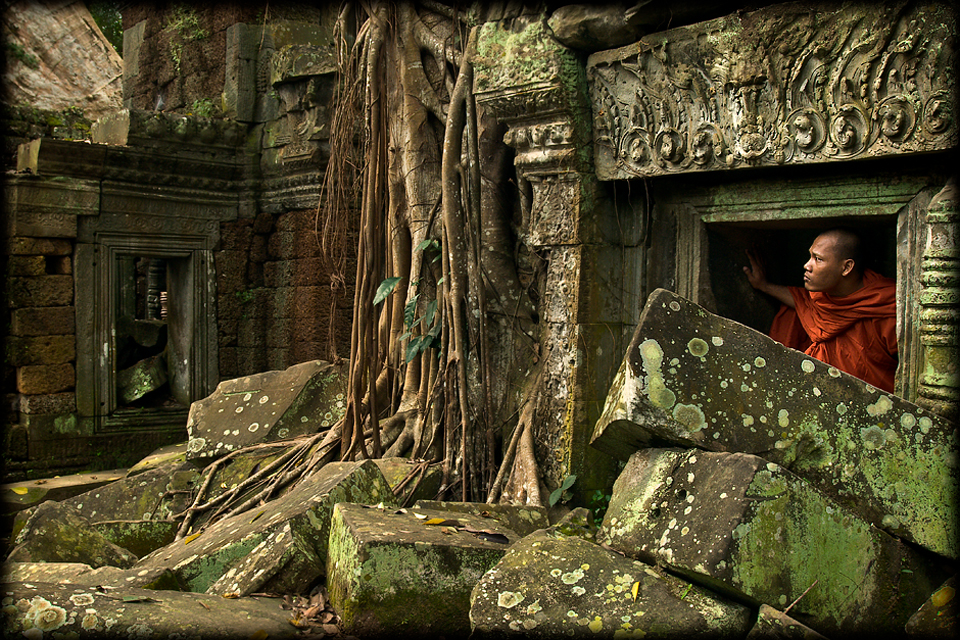
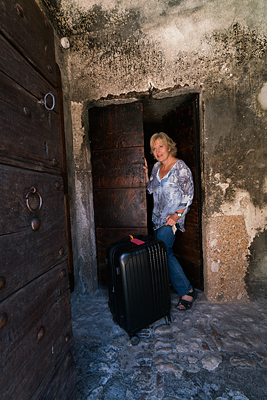

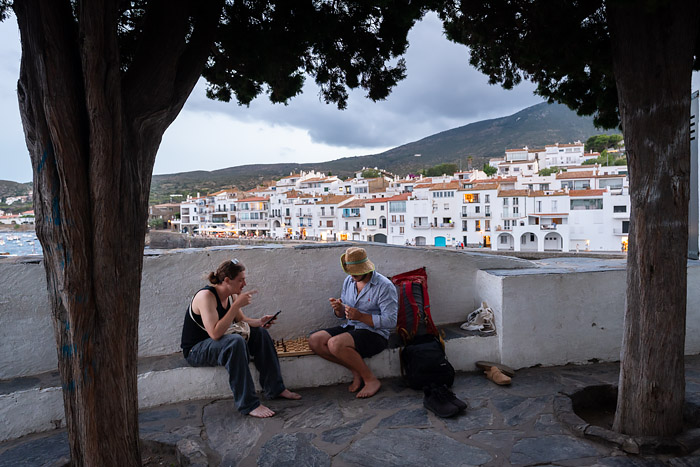
If you’re an independent traveler who likes unusual destinations with an eccentric bent, then Cadeques, Costa Brava is just the place! I spent two nights here, soaking up the charming village vibes in northern Spain where Salvador Dali lived and painted for 50 years.
Cadeques itself is worth a stay. This little gem draws those-in-the-know who return year after year. Curving around an idyllic bay in the Mediterranean Sea, white-washed homes line narrow cobblestone lanes sloping from the hills to the ocean coast. Painted tiles, blue painted doors and wild profusions of pink and purple blossoms add pops of color to all the white.
.jpg)

Travelers enjoy the beaches, fresh seafood, trekking, kayaking and yachting. But the chance to peek into Dali’s world is what lured me here.
I could’ve taken one of the 10 hour day tours from Barcelona that zips into Cadeques for a couple hours with the single objective to visit his home. But I wanted to linger. Absorb the place that inspired him. And to immerse myself in everything Dali.
.jpg)
So after researching, and planning, and staying in this adorable little village on the northern coast of Spain I’m ready to share my experience and recommendations to help plan your trip. And a couple you’d never find mentioned in guidebooks.
.jpg)
Here are my ideas for a Dali themed stay…
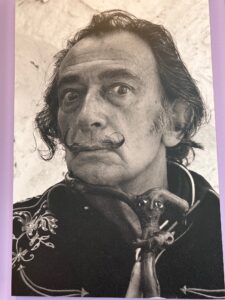
Stay in an inn with eclectic Dali decor!
.jpg)
Dali’s world in Cadaqués: La Residencia inn
Hotel La Residencia made a perfect Dali base. Located on the seafront promenade, 2 blocks from the pebbly beach where a Dali statue stands, this yellow 3 story hotel dates from 1904, the year Dali was born. Cadaque’s first hotel, it was built for travelers who trekked here before roads existed.
History
Originally called Fonda Miramar, it became famous among writers, painters and artists who drew creative inspiration from this tiny fishing village. Guests Garcia Lorca, Picasso (1910), Albert Einstein (1919) and many French surrealism poets and artists stayed here. Dali often visited the hotel during his lifetime to interact with these guests.
He also personally knew, Joaquim Miró, who was a prominent Dali connoisseur and collector. In 1994, Miró purchased the hotel, made major renovations, and renamed it La Residencia. Stuffing it with his collection, he created a unique, quirky Dalinian personality. Nothing conventional here!
Daliesque-ness
Uneven steps and an unusual elevator lead to the 15 guest rooms decorated with replica Dali art and Dali mustached coasters. The lobby, reading room, exhibition room and hallway leading to the dining area is chock full of original Dali objects and art. Even though it is not a museum, it holds more Dalí works than the Salvador Dalí House-Museum in Portlligat!
.jpg)
The owner Miró knew Dali, and was a huge collector of his work. He proudly displays his personal collection of art, books, tapestry, momentos, and even photographs. Which makes it feel more like you’re staying in the home of Dali’s friend than an inn.
.jpg)
Was fun wandering around at leisure just looking at all the different pieces–trying to get inside Dali’s mind to understand what in the world he was thinking. Some were quite perplexing. Or even alarming. Especially for three young boys who were sneaking peeks of nude drawings with wide eyes and shocked expressions.
.jpg)
My seaview room on the 2nd floor was a standard ensuite room with vintage furniture, a comfortable bed and a small balcony with a view of the bay and main square. Enjoyed drinking coffee from this perch, watching people below and yachts bobbing at sea. Downstairs, breakfast (featuring local Catalan foods) was served outdoors on a patio facing the sea. A mellow way to start the day.
.jpg)
The very personable man at the front desk went out of his way to recommend sights and highlights with a map and recommendations for dining. He loved chatting with guests and making them feel looked after. When I checked out he surprised me– gifting me with 2 Dali posters and a miniature laminated passport.
If they have rooms available, I highly recommend Dali fans stay here. If not for the art alone! Priceless immersion.
Walk to Dali’s home in a teensy fishing harbor
Dali’s world in Cadaqués: Port Lligat
Up and over the northern end Cadaques is Port Lligat, a tiny bay located on Cap de Creus peninsula on the Costa Brava of the Mediterranean Sea. This remote fishing hamlet gathered world attention after surrealist painter Salvador Dali moved here.
.jpg)
He purchased several fishing hut to create his bizarre home and painting studio. And kept a fishing boat moored in the harbor for frequent excursions out to sea.
His home, now a museum, is what people come to Cadaqués to see! The teensy fishing village doesn’t have much in the way of tourist services here — no lodging that I noticed –but did have 2 restaurants further up the hill toward the beginning of the Cap de Creus hike.
This adorable petite home sits across from Dali’s.
.jpg)
To reach this port requires walking over the hill from Cadaques village heading north (30 minutes) or a golf cart taxi (10 min). Look for signs Carrer Miranda. Ask your hotel for instructions/map. I took a taxi to get there (to avoid getting lost and missing my ticketed tour time) then walked back.
Dali’s house is the white one near the coast. And no, you do not have to hike to the top of this mountain to reach Cadaques. The roadside path goes past the church on the left halfway up the photo.
.jpg)
There is also a 1.2 mile coastal walking path between Cadaques and Port Lligat if you want a scenic route.
Ride in Dali’s actual boat!
.jpg)
Dali’s world in Cadaqués: Barca Gala boat ride
The Barca Gala excursion is a 75 minute boat tour on the historic fishing boat that belonged to Salvador Dali and his wife Gala.
Dali painted his traditional Catalan fishing boat a bright yellow (his signature quirky touch) and moored it in front of his house. Naming it after his muse, Gala, he and his wife took it out to explore the rugged coastline that inspired many of his surreal landscape paintings.
I joined 5 others on this tour, which departed from the tiny harbor in front of his former home. We cruised through the open sea, hugging the dramatic Cap de Creus Natural Park coastline, passing hidden coves and jagged rock formations. Due to the rising tide, we couldn’t enter Cova de l’Infern (Hell’s Cave) this day but saw the entrance.
.jpg)
Reaching a scenic spot with crystal clear turquoise waters, our captain pulled out laminated photographs of Dali and Gala on this boat–laid back, enjoying the sunshine and the Mediterranean Sea. Gala smiling, Dali more serious, some posed with each other, Dali swimming and Gala feeding a swan.
.jpg)
It seemed surreal–wearing a straw Gala hat, looking at their photographs while riding their boat and swimming in the very places that brought them joy.
Tours run spring to fall with a max of 11 people. Price €15-25. Check the official site excursionesbarcagaladedali.com or just show up in person and pay cash.
Tour Dali’s home & studio
.jpg)
Dali’s world in Cadaqués: Salvador’s sanctuary
What started as a humble fisherman’s hut in 1930 evolved into a labyrinthine masterpiece over the span of 40 years. This was Dali’s permanent home until 1982. He described it as a “biological structure growing organically with each new cell (room) added as life impulses demanded.” No grand architectural plan. Just an outpouring of his eccentric mind.
The house is a maze of interconnected former fishermen’s huts, linked by winding corridors, unexpected level changes and dead-end passages.
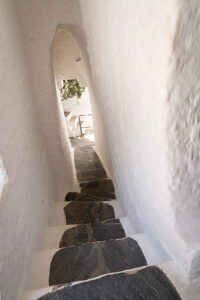
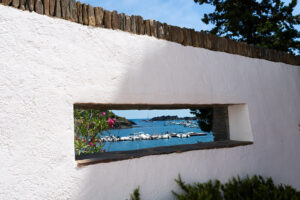
Every irregular open window frames Port Lligat bay and Cap de Creus rocks, the constant muse in Dali’s work.
Once highly private, today it is open to the public as Salvador Dalí House-Museum for guided tours. Tickets are timed and must be purchased online, in advance (sell out quickly).
Trust me, don’t be late! (They don’t mess around. You are required to check in 30 minutes before your timed tour begins! You cannot simply show up at your ticketed time with ticket in hand–they will turn you away. I saw several upset travelers.)
Living spaces
Our guide led our group of 15 through the front door where a polar bear holding a lamp greeted us.
.jpg)
We walked through Dali’s private living spaces including his library, kitchen, sitting room and bedroom. He obviously had a love for taxidermy as there were stuffed animals everywhere.
.jpg) Odd objects like naked mannequins, upside down umbrellas and tiny chairs decorated various spaces.
Odd objects like naked mannequins, upside down umbrellas and tiny chairs decorated various spaces.
.jpg)
.jpg)
Their bedroom had twin beds positioned to catch morning sunlight with mirrors. Velvet upholstered furniture, woven carpets, and eclectic antiques filled the room.
.jpg)
Gala’s Oval Room was a domed, private retreat for reading and entertaining her guests. Dali had no input. She decorated this room herself and it was void of his art. The dome shape creates an incredible acoustic echo that amplifies whispers dramatically.
.jpg) Gala
Gala
In 1969, Dali bought and renovated a crumbling 12th century medieval castle in Pubol for his wife, so that she could rule her own palace. He even built her a throne. After painting the ceilings and filling it with his art, animal sculptures and antiques he went back to Port Lligat. This was her sanctuary.
Gala typically stayed at her castle during summer months between 1971-1980. It was her private refuge from public demands and she could freely host her own guests, who were frequently younger men.
Dali could only visit when she invited him in writing. He claimed he was thrilled by this arrangement as it gratified his masochistic sentiments, making him feel like a suitor luring a medieval queen. Acting out a surrealist performance where he had to conquer a woman who was already his.
When Gala died at Port Lligat in 1982, Dali smuggled her body back to the castle according to her wishes (Spanish law prohibited the transport of a corpse across provincial lines). Dressing her in a red Dior evening gown and large sunglasses, he propped her in the back seat of their 1969 Cadiallac de Ville as if she were a passenger and successfully made the 50 mile journey to Pubol unnoticed.
Dali never returned to his coastal home after that. He remained at the Pubol Castle to be close to her crypt. When he was badly burned in a fire there a couple years later, he moved back to his childhood town of Figueres and lived in his Theatre Museum, where he was later buried in 1989.
Dali’s painting studio
A bright space with plenty of natural light, his studio overlooked the bay that inspired him. His former workspace looks exactly like it did when he painted there. When Gala died, he abandoned his art and his home. And left everything behind.
.jpg)
Two giant easels showcase two paintings he had been working on. Eerily frozen in time.
.jpg)
Dali’s exact intent is unknown. But his obssession at that time in the 1970-80s blended religious iconography, mathematical catastrophe theory, optical illusions and ethereal floating forms. Angels were a recurring motif, often portrayed as a spiritual guardian tied to Port Lligat landscapes.
.jpg)
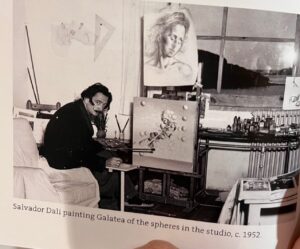
Found this photo of him painting in this studio in one of the books back at the hotel. And it happens to be my favorite! He’s painting a series of bubbles to form his wife’s portrait. Pure artistic genius! Titled Galatea of the Spheres. Taken in 1952.
Gardens
Our guide led us outdoors to Dali’s phallus-shaped swimming pool decorated with striped snakes, sprouting fountains, a Michelin Man, and other odd adornments. Mick Jagger was just one of the celebs who hungout here.
.jpg)
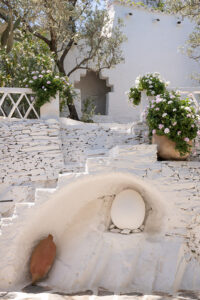
After that we were free to wander around the gardens on our own. Note his obsession with eggs!
.jpg)
This is a replica of the egg that Dali and Gala emerged from during a publicity stunt to celebrate their rebirth as a couple (when she deserted her husband for Dali).
.jpg)
And walked past terraced olive groves with random art installations.
.jpg) Came across an outdoor pavillion with folding chairs, and enjoyed sitting a bit watching a film about Dali and Gala that played on a loop. The guided tour felt a bit rushed going through a few of the rooms. But the freedom to linger in the gardens afterward was much appreciated for reflecting without any rush.
Came across an outdoor pavillion with folding chairs, and enjoyed sitting a bit watching a film about Dali and Gala that played on a loop. The guided tour felt a bit rushed going through a few of the rooms. But the freedom to linger in the gardens afterward was much appreciated for reflecting without any rush.
And don’t miss the gift shops as you exit for unique Dali souvenirs. Items not available elsewhere–likt the 2 wavy glass melting-clock shot glasses I bought, and a waterbottle decorated with Dali’s Galatea of the Spheres.
Tickets are available online through the Dali Foundation for €15.50 adults. Limited to 8 pax per tour group.
Hike through Persistence of Memory landscapes!
.jpg)
Dali’s world in Cadaqués: Cap de Creus Natural Park
After I toured his home and studio, I hit the winding coastal trails in Cap de Creus Natural Park. What better way to see the exact wild, landscapes the inspired Dali to create his melting-clock-inspired scene?
The rugged, wind-sculpted coastline was Dali’s muse. He called it his ‘mental landscape’ saying that the eroded rocks shaped his personality and surreal forms. The bizarre melting shapes of the granite and pegmatite cliffs inspired his fluid, dreamlike motifs.
.jpg)
The barren bay, distant cliffs and overall desolate scene in The Persistence of Memory (1931) is a stylized view of Portlligat bay with Cap de Creus rocks. The central fleshy creature is based on specific rock formations found here, the soft eroding stones echo the melting clocks.
He also created numerous realistic landscapes during the 1920s-1950s (Madonna of Portlligat, Christ of Saint John of the Cross, Shades of Night Descending). Walking along the coast, you can see the wind-sculptured rocks that look exactly like the biomorphic shapes in his artwork.
.jpg)
My hike
The trail was rugged but rewarding with views of turquoise bays, jagged cliffs, and hidden coves. About an hour and a half later, I was ready to cool off. I followed a trail to this secluded spot and waded in. (The tiny yellow boat in the distance is the Gala boat on tour, stopping to swim!)
.jpg)
Collected a few shells and just soaked up the scene. Surprisingly remote. And not a soul in sight.
I’ll admit I did get a little lost after that. Relying on my Gaia app, the trail just disappeared on my phone and in real life. No matter how hard I tried to find it, I eventually gave up and just retraced my steps back the way I came. So no lighthouse finale for me!
.jpg) But the views were even more beautiful in the late afternoon sun on the hike back.
But the views were even more beautiful in the late afternoon sun on the hike back.
.jpg)
Wander around where Dali did
Dali’s world in Cadaqués: village life
Dali spent summers here as a child with his family in their holiday home, and as an adult frequently popped into the village from his home in Port Lligat for socializing, drinks and people watching. He loved the bohemian vibe that Cadaques attracted and the artists, intellectuals and celebrities who flocked here (no doubt, partly because of him).
His favorite hangouts included these spots. His drink of choice was pink champagne.
Bar Marítim (main beach promenade) was a big favorite. Dali often arrived by boat, mooring his yellow Barca Gala right in front of the terrace! This historic seaside bar (open since in 1935) is still iconic for tapas and cocktails and is displays photos of famous visitors.
Bar Melitón (old town, near the seafront) A classic spot from the 1950s-70s where Dali hung out with friends like Marcel Duchamp (who played endless chess games here). Photos of Dali, Gala, and Duchamp adorn the walls. Perfect for coffee or a casual drink.
L’Hostal (restaurant on the seafront) This legendary boho spot had a wild reputation in the 60s-70s. Dali partied here with Mick Jagger, Keith Richards and Duchamp. Walls show photos of him and Gala mingling with the crowd.
.jpg)
Not all who wander are lost
Make time to explore. There are so many intriguing little passageways and narrow lanes. Some with arched entrances and herringbone cobblestones. The unusual patterned slate stones, rastell, are leftover from the days when villagers used donkeys to haul products home. The stones helped prevent them from slipping.
.jpg)
I enjoyed walking through the maze-like village just observing the decor. Many homes had blue doors.
.jpg)
Hand-painted tiles.
.jpg) Flowering trees.
Flowering trees.
.jpg)
Sometimes there were little shops to reward you for walking to the top of the hill.
.jpg)
Or this ancient 16th c Gothic church, St Maria, with an amazing gold alter!
.jpg)
Dining
There were excellent dining options both inside and out. Fresh fish from monkfish and grilled sardines to anchovies or prawns and grilled chicken seemed to be staples along with crisp Catalan wine. But my favorite meal there was completely different and happened randomly. Was actually headed elsewhere. But walking past, I liked the choices displayed on their outdoor menu and went in.
The restaurant wasn’t far from my hotel but I can’t tell you how I got there. I took a pic so I’d remember to share–El Rebost. It was a small casual place where the chef personally brought me my food. Butternut squash with goat cheese, brown-butter sage, pecans and spices was a yummy appetizer. Followed by tender steak. Paired with red wine, it was warm and filling and melt-in-your-mouth delicious!
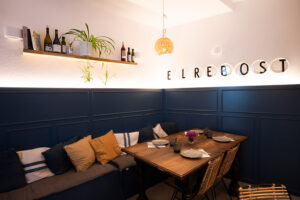
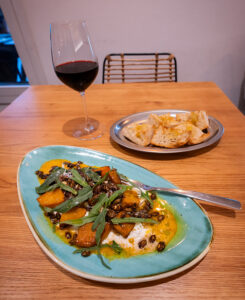
Walking along the promenade at night was special too. As skies darkened, the illuminated buildings cascading down the hillsides turned truly picturesque. The quiet stillness broken only by the rhythmic crashing of waves against the pier. And the occasional burst of laughter as I passed groups of friends gathered at open-air bars and restaurants.
.jpg)
Locals were friendly and engaging–many expressed surprise that I knew about their favorite hideaway (didn’t see any other Americans during my visit). Had it not been for researching everything Dali, I admittedly wouldn’t have.
But I’m sooo glad I did. I really enjoyed every moment of my stay in quaint Cadaques. And developed an even greater appreciation for the art and mind of the exceptional Dali.
Getting to Cadaqués
No car needed! Take the high speed AVE train from Barcelona (1 hour south) or Montipellier, France (2 hours north) to Figueres, Spain (Vilafant station). Then a taxi into town (15 min). Be SURE to visit the Dali museums in Figueres while there. Both his birthplace home museum and the massive Theatre Museum that HE created of his artwork. Then ride the Sarfa bus to Cadeques (1 hour) which travels to the coast 3x a day.
Buy your train tickets in advance! (I snagged an early seat on a fully booked train from France– then almost missed it due to a flat tire on my car rental that morning when I left the salt flats.)
.jpg)
If you’re a Dali fan I hope this gives you some ideas for a Dali-themed stay. If you’ve been, let me know if you found any other Dali highlights that I missed!
~~~~~~~~~~~~~~~~~~~~~~~~~~~~~~~~~~~~~~~~~~~~~~~
Save a pic to your Pinterest board for later…
.jpg)
.jpg)
.jpg)